A Father, A Son, and the Fear of Being Forgotten

Reflections on “Chris Hemsworth: A Road Trip to Remember”
In “Chris Hemsworth: A Road Trip to Remember,” Chris Hemsworth steps away from blockbuster spectacle and into something far more intimate: a journey with his father, Craig, who is navigating the early stages of dementia.
What unfolds is not just a road trip, but a quiet confrontation with memory—how it fades, how it’s preserved, and how families learn to live in between.
Reconstructing Memory
Rather than relying solely on conversations, the documentary explores memory through experience.
Chris and his father revisit fragments of the past—rebuilding their former home, traveling back to familiar places, and reconnecting with old neighbors. These moments aren’t framed as solutions, but as attempts. Sometimes they work, sometimes they don’t.
In one particularly telling encounter, Craig meets someone from his past but cannot recall who they are. Instead, he gently pretends—revealing a subtle, human instinct to maintain dignity even as memory slips away.
This is where the film feels most honest: it doesn’t dramatize forgetting, it observes it.
When Love Confronts Fear
The emotional core of the documentary emerges during a quiet conversation at a campsite.
Craig admits something many families fear but rarely say out loud: he doesn’t want to become a burden.
It’s a simple statement, but it carries weight—not just for him, but for anyone watching who has faced or will face the same reality.
Chris doesn’t respond with denial or reassurance in the conventional sense. Instead, he reframes the idea of care itself. What might feel like a burden to one is, to another, an act of love returned.
In that moment, the film shifts—from documenting a condition to exploring a relationship.
Seeing the Future in the Past
The closing reflection centers on a photograph—one that also serves as the film’s poster.
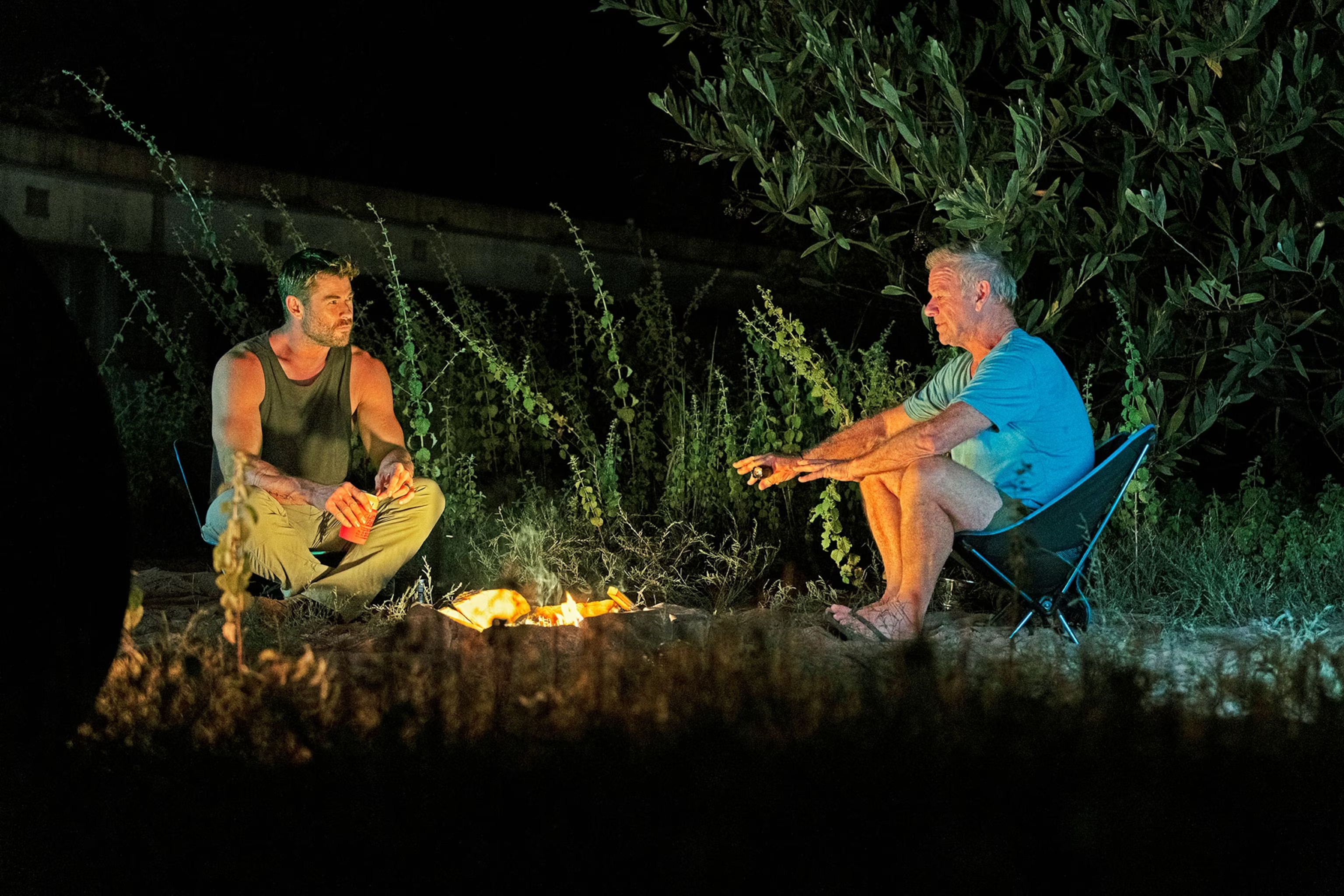

Craig looks at his son with a quiet, lingering gaze.
For Chris, that look becomes something more than a memory. It becomes a mirror. In his father’s eyes, he begins to see his own future—not just as a son, but as a parent.
It’s a subtle but powerful transition: from remembering the past to anticipating what lies ahead.
Craft, Tone, and Creative Choices
From a visual standpoint, the film leans into a soft, reflective tone.
Cinematographer Jim Jolliffe captures moments that feel almost dreamlike—particularly in the motorbike sequences, where movement and landscape blur into a sense of nostalgia. These scenes offer a visual metaphor for memory itself: fluid, fragmented, and slightly out of reach.
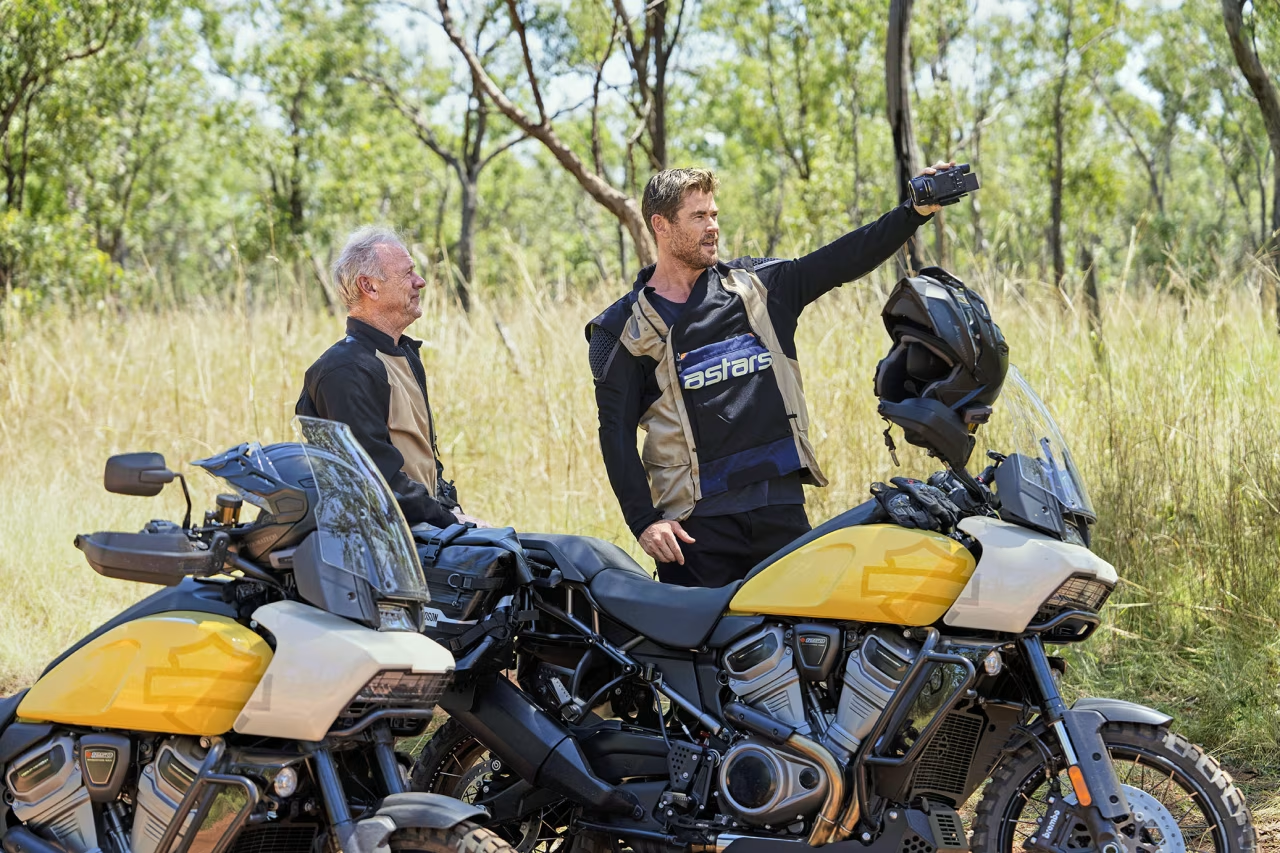
However, not all creative choices land with the same impact.
Director Tom Barbor-Might uses black-screen transitions to separate sections of the story. While the intention may be to create pauses for reflection, the effect can feel disruptive—breaking emotional continuity rather than deepening it. It’s a stylistic decision that draws attention to itself, sometimes at the expense of immersion.
More Than a Story About Memory Loss
At its core, “A Road Trip to Remember” is not simply about dementia.
It’s about how families choose to remember—even when memory itself becomes unreliable.
It’s about dignity, about fear, and about the quiet negotiations that happen between generations. Most of all, it’s about love expressed not through grand gestures, but through presence: staying, listening, and continuing the journey together.
The film runs just under an hour, but its emotional resonance extends far beyond that. It lingers—not because of what it shows, but because of what it gently asks the audience to consider.
What does it mean to remember someone… when they may no longer remember you? []